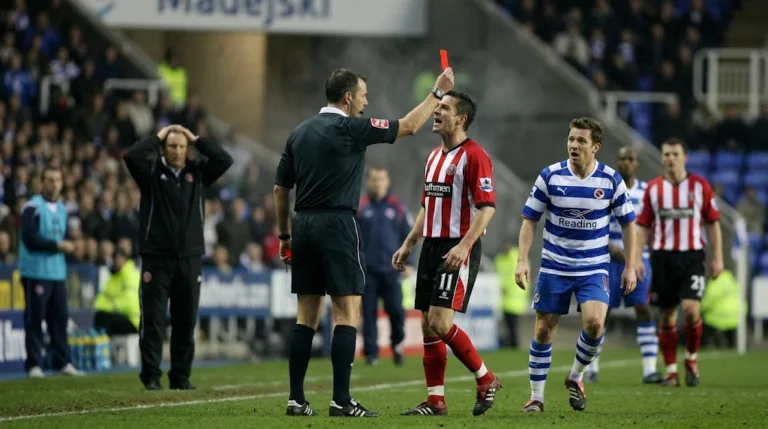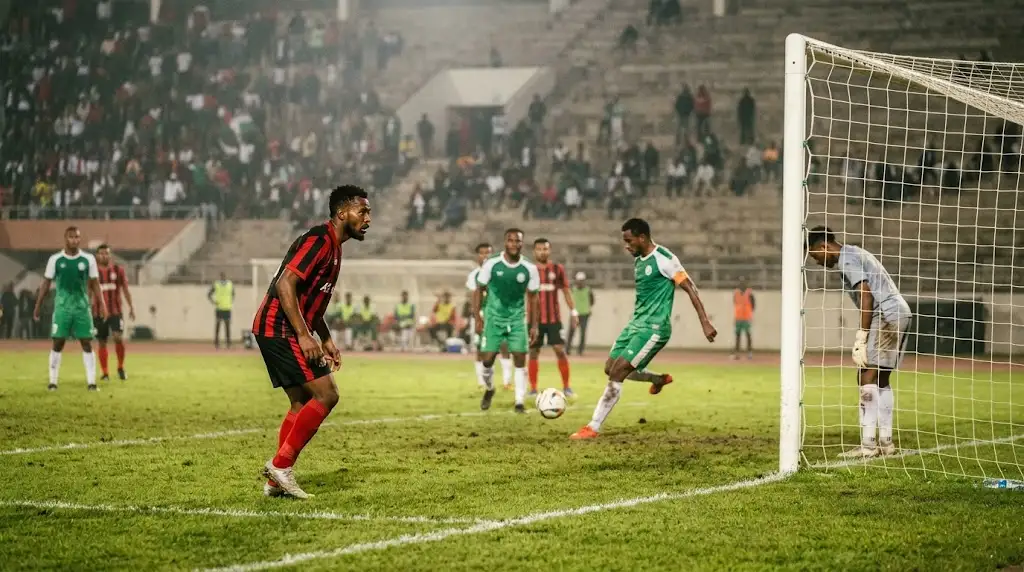
The referee blew his whistle to start the match at Mahamasina Municipal Stadium, but the away team did not move forward. Instead, the players of SO l’Emyrne rolled the ball backward toward their own penalty box. Their own goalkeeper watched quietly as a defender hammered the ball directly into the back of his own net.
The players of AS Adema stood completely still in the middle of the pitch. Before they could even understand what was happening, SO l’Emyrne grabbed the ball from the net, raced back to the center circle, and kicked off again. Once more, they turned around and drove another clean strike past their own keeper.
It was October 31, 2002, and the final round of the Madagascar national championship had just begun. Nobody inside the stadium knew it yet, but they were about to watch the most outrageous act of sporting rebellion ever seen. Over the next ninety minutes, one team would score 149 own goals without their opponents ever touching the ball.
To understand this madness, you have to look at what happened four days earlier. The top four clubs in Madagascar were competing in a round-robin playoff to decide the league champion. SO l’Emyrne, the defending champions, needed a victory against DSA Antananarivo to keep their title hopes alive.
With only two minutes remaining in that crucial game, SO l’Emyrne held a tight 2-1 lead. Then, referee Benjamin Razafintsalama awarded a disputed late penalty to DSA. The penalty went in, the match ended in a 2-2 draw, and the league title was officially handed to AS Adema before the final day.
SO l’Emyrne felt completely cheated by the referee’s late call. Football has seen strange moments of rule-bending before, such as Barbados defending both nets against Grenada during a Caribbean Cup tie in 1994. However, that Caribbean game was driven by tournament math, while this match in Madagascar was fueled entirely by pure anger.
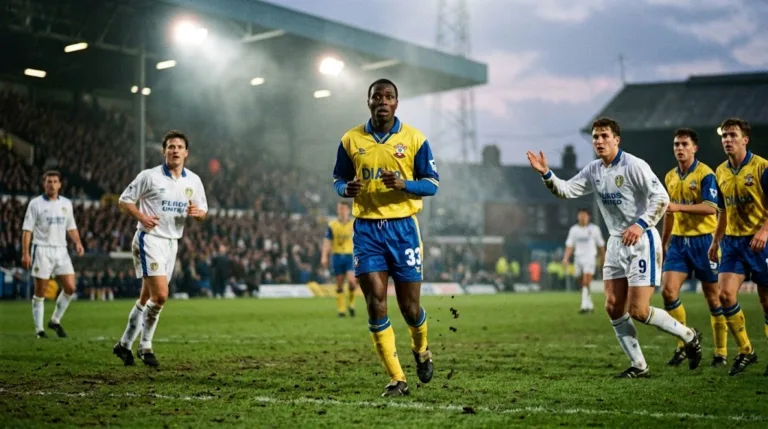
When matchday arrived, SO l’Emyrne coach Ratsimandresy Ratsarazaka marched onto the pitch to confront the match officials. He argued bitterly about the refereeing decisions that had destroyed his club’s entire season. Realizing the league federation would not listen, Ratsarazaka made a shocking choice.
He gathered his starting eleven and gave them a simple, direct order. They were not to compete, tackle, or pass into the opposing half. Their only mission for ninety minutes was to kick the ball into their own goal as many times as possible.
Football history includes famous moments of pitch-side mutiny, such as Kepa Arrizabalaga defying Maurizio Sarri at Wembley during the 2019 League Cup final. Yet this protest in Madagascar was not a single player refusing a substitution. It was an entire starting lineup agreeing to burn their reputations to the ground in front of thousands of fans.
Once the plan went into motion, the match became an absurd machine. SO l’Emyrne scored an own goal, fished the ball out of the net, sprinted to the center circle, and restarted play immediately. A new own goal went into the net roughly every thirty-six seconds.
The AS Adema players could only stand and watch in utter disbelief. They did not celebrate, press the ball, or try to interrupt the strange routine. Their goalkeeper spent the afternoon leaning against his goalpost, watching his rivals destroy their own goal from seventy yards away.
In the stands, the mood shifted quickly from nervous laughter to total outrage. Supporters who had paid their hard-earned money to watch a title showdown realized they were watching a farce. Hundreds of fans left their seats and marched down to the ticket booths to demand full refunds.
The match officials were powerless to stop the slaughter. The laws of football state that a team can pass the ball back to their own goalkeeper, and putting the ball into your own net is completely legal. Because SO l’Emyrne followed basic restart procedures after each goal, the referee had no technical reason to blow the final whistle early.

By halftime, the scoreline looked like a basketball game. The second half brought no relief, as SO l’Emyrne continued their relentless self-destruction under the afternoon sun. When the final whistle finally blew, the scoreboard read AS Adema 149, SO l’Emyrne 0.
The previous world record for the biggest victory in football history belonged to Scottish side Arbroath, who beat Bon Accord 36-0 in 1885. That historic record had stood untouched for 117 years. In ninety bizarre minutes, SO l’Emyrne did not just beat the record; they multiplied it by four.
The fallout was just as explosive as France’s infamous Knysna bus strike at the 2010 World Cup. Football authorities across Africa and the world were stunned by the sheer disrespect shown to the competition. The Madagascan Football Federation acted swiftly and handed out some of the harshest penalties the sport had ever seen.
Coach Ratsimandresy Ratsarazaka received a three-year suspension from all football activities and was banned from entering any stadium during that period. Four key players were slapped with bans until the end of the season and kicked off the national team. Among them was club captain Mamisoa Razafindrakoto, who also happened to be the captain of the Madagascar national team.
Goalkeeper Manitranirina Andrianiaina, Nicolas Rakotoarimanana, and Dominique Rakotonandrasana were also punished for carrying out the on-pitch protest. The remaining players on both sides received formal warnings about their conduct. Even the referee, whose earlier calls sparked the entire controversy, escaped without any formal punishment.
The political fallout went even further than the pitch. Madagascar’s Ministry of Youth and Sports stepped in and dissolved the national football federation entirely due to the embarrassment. FIFA eventually had to intervene to restore order and re-establish a governing body for the country.
More than two decades later, that wild afternoon in Antananarivo remains legendary. Players and managers often complain about bad refereeing, but no team has ever protested with such ruthless dedication. SO l’Emyrne proved that when football players feel cheated, they can turn ninety minutes of sport into an unforgettable act of spite.

Callum Mercer is a football journalist and digital editor specializing in long-form features, human-interest narratives, and regulatory shifts across European and world football. With nearly a decade of experience tracking player journeys from lower-league academies to continental tournaments, Callum focuses on primary-source reporting, tactical context, and the untold stories behind the matchday headlines.