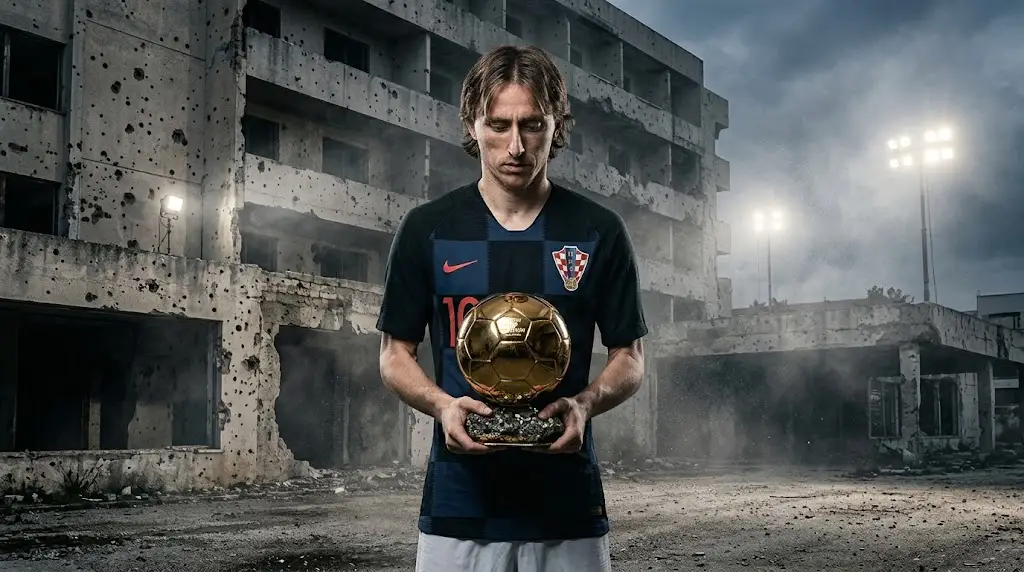
The loud wail of the air raid siren cut through the morning sky in Zadar. While other families ran down into dark concrete basements, six-year-old Luka Modrić stayed out in the hotel parking lot. He kept dribbling a worn, flat leather ball across cracked tarmac, side-stepping sharp pieces of shattered glass.
Mortar shells often hit nearby buildings during the height of the Croatian War of Independence in 1992. The small boy with bright blond hair barely flinched when the ground shook beneath his torn sneakers. To him, keeping the ball under control was the only way to silence the terror outside.
Life had not always been spent inside the crowded walls of Hotel Kolovare. Just months earlier, Luka lived peacefully in a mountain stone house near the village of Modrići on Mount Velebit. He spent his early childhood following his beloved grandfather, who shared his exact name and watched over the family sheep.
That quiet life ended in terror in December 1991. Rebel militiamen drove up the mountain road and ambushed the older Luka Modrić while he was out tending his animals. The armed group executed the grandfather near his barn, setting the family home on fire as warning smoke drifted down the hillside.
The family had no choice but to pack whatever few clothes they could carry and run into the night. They walked for miles through the darkness until they found shelter in the coastal city of Zadar. There, local authorities assigned them a single cramped bedroom inside Hotel Kolovare, which had quickly become a crowded refugee center.
Hundreds of displaced families packed into the hotel corridors with very little running water, food, or electricity. Fear was everywhere, but young Luka refused to sit still in the dim room. Much like Steven Pienaar dodging gang bullets in Westbury to play the game he loved, Modrić found safety only when a ball touched his feet.
Hotel workers quickly grew familiar with the tiny boy who spent all day bouncing the ball off the concrete walls. He played from sunrise until late in the evening without stopping. According to former hotel employees, the little boy broke more hotel window panes with his wayward shots than the falling artillery shells did.
His father, Stipe, worked long hours as a military mechanic repairing trucks near the front lines. Money was scarce, and buying genuine football gear was completely out of reach for a refugee family. Stipe used scraps of oak wood to carve custom shin guards so his son could play without bleeding from bruised legs.
Luka wore those wooden shin pads with pride when he showed up for his first trial at local club NK Zadar. The academy director, Tomislav Bašić, instantly noticed the child’s unusual ability to see passing lanes before they opened. Bašić took Luka under his wing, shielding the quiet boy whenever older players tried to push him around.
Despite his obvious talent, major clubs refused to give the young playmaker a real chance. Regional giant Hajduk Split invited him for a short trial, but the youth scouts quickly rejected him. They wrote in their scouting notes that Luka was far too small and frail to ever become a professional athlete.
That painful rejection left the young boy in tears, but it also lit a fierce fire inside his chest. Similar to the house fire that shaped Eduardo Camavinga during his youth, losing everything early in life made Modrić completely fearless. He simply returned to the Zadar training pitch the next morning and worked twice as hard.
Coach Bašić knew his student needed to toughen up against physical opponents if he wanted to survive in elite football. At just eighteen years old, Luka went on loan to Zrinjski Mostar in the notoriously rough Bosnian league. Grown men kicked the small teenager without mercy, but Luka learned how to spin away before their studs could catch his ankles.

By the end of that bruising season, opposing fans voted him the league’s player of the year. He had learned how to use low balance, rapid shoulder drops, and outside-of-the-boot passes to escape tight spaces. Playing on muddy pitches surrounded by hostile crowds proved easy compared to surviving wartime artillery.
Dinamo Zagreb soon recalled him and built their entire midfield around his vision. After winning three straight league titles in Croatia, top European scouts realized that his small frame was actually his greatest weapon. Tottenham Hotspur signed him in 2008, where he quickly proved that English football’s roughest tacklers could not pin him down.
Real Madrid then paid over thirty million pounds to bring him to the Santiago Bernabéu in 2012. Spanish media voters initially labeled him the worst signing of the season after a slow start under José Mourinho. Modrić never complained, keeping his head down and working his way into the heart of Madrid’s midfield.
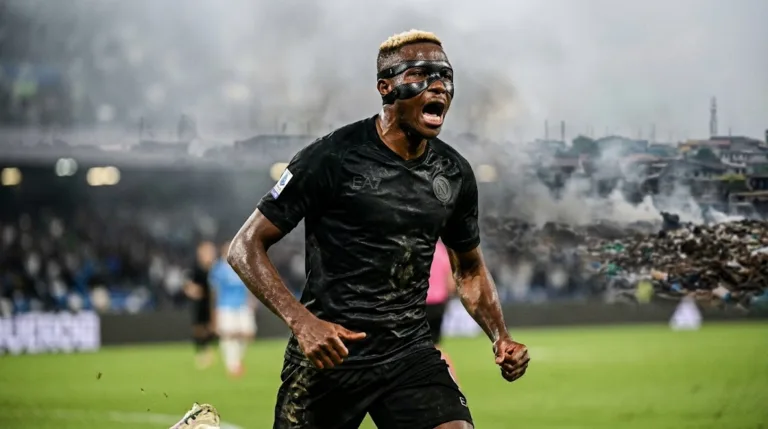
Just as Victor Osimhen scavenged Lagos landfills before lighting up Italian football, Modrić used his difficult roots as fuel. He became the engine behind Real Madrid’s record run of five Champions League titles in nine seasons. He dictated the tempo of the biggest games in Europe, making World Cup winners chase his shadows.
In the summer of 2018, Luka led Croatia all the way to the World Cup final in Moscow. A country of only four million people watched their tiny captain outwork the biggest teams on the planet. Months later in Paris, he lifted the Ballon d’Or, breaking the decade-long dominance of Lionel Messi and Cristiano Ronaldo.
Even with his trophy cabinet full, the memories of Hotel Kolovare never truly faded away. Modrić still keeps the mental pictures of that damaged parking lot and the stone house his grandfather built on the hillside. When defenders try to pressure him in the final minutes of a match, they are trying to scare a man who mastered his trade under falling bombs.

Callum Mercer is a football journalist and digital editor specializing in long-form features, human-interest narratives, and regulatory shifts across European and world football. With nearly a decade of experience tracking player journeys from lower-league academies to continental tournaments, Callum focuses on primary-source reporting, tactical context, and the untold stories behind the matchday headlines.