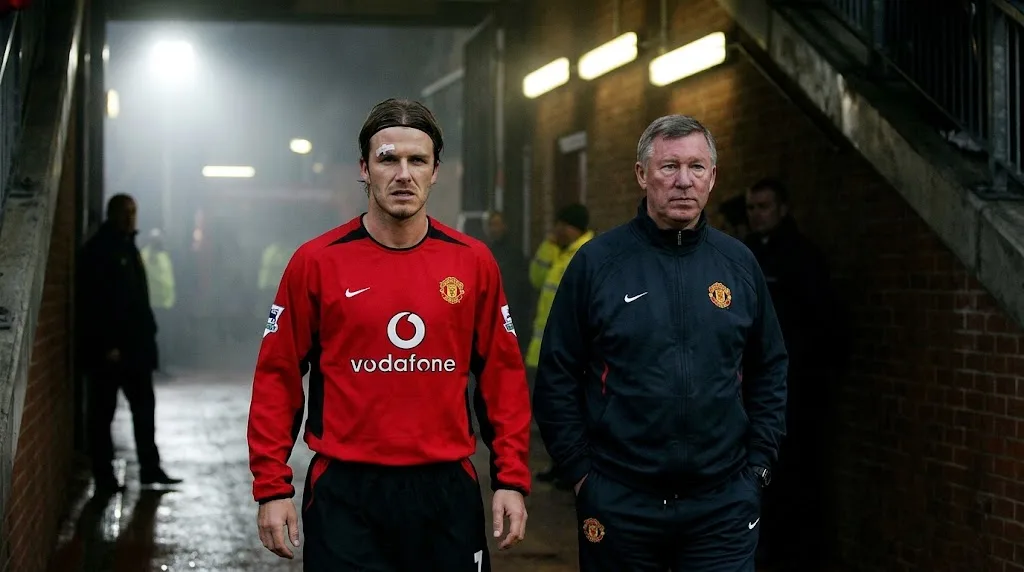
The Manchester United dressing room was dead silent after Arsenal knocked them out of the FA Cup. Muddy socks and wet jerseys covered the floor while Sir Alex Ferguson paced back and forth in pure fury. His face was bright red, and his voice echoed off the white tile walls as he pointed his finger directly at David Beckham.
Ferguson kicked a pile of dirty clothes across the floor in frustration. Hidden underneath the kit sat a heavy leather football boot that suddenly launched into the air. It flew straight across the room and smashed directly into the skin above Beckham’s left eye.
Beckham reached up and pulled his hand away to see bright red blood on his fingers. In that split second, the England captain jumped to his feet and lunged straight toward his manager. He shouted curses as he tried to reach Ferguson, ready to throw a punch of his own.
Ruud van Nistelrooy leaped out of his seat and grabbed Beckham around the chest. Ryan Giggs quickly jumped in from the other side to hold Beckham’s arms down against his sides. The dressing room erupted into total chaos as teammates fought to keep player and boss apart.
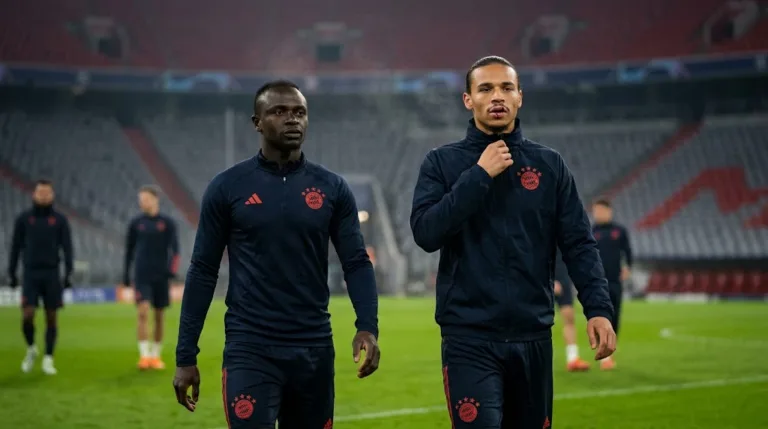
Much like the shock of Sadio Mane’s punch on Leroy Sane years later in Munich, the entire squad froze in disbelief. Nobody had ever seen a player try to attack Sir Alex Ferguson inside his own sanctuary. The legendary manager stood completely still, pointed toward the bench, and told Beckham to sit down.
The Cracks in the Father-Son Bond
This explosion did not happen out of nowhere. Ferguson had discovered Beckham as a skinny twelve-year-old kid living in East London. The manager treated him like a second son, protecting him through thick and thin as Manchester United conquered English football.
Together, they won six Premier League titles and a famous European Treble in 1999. Beckham’s wicked free kicks and endless running made him the most famous player in the world. He was the golden boy of Old Trafford, and Ferguson loved his work ethic more than anyone else.
Problems began when Beckham’s life off the pitch grew bigger than the football club. He married pop singer Victoria Adams and stepped into the bright lights of global fashion. Ferguson watched Beckham change his haircuts, wear sarongs, and miss training sessions to attend celebrity events.
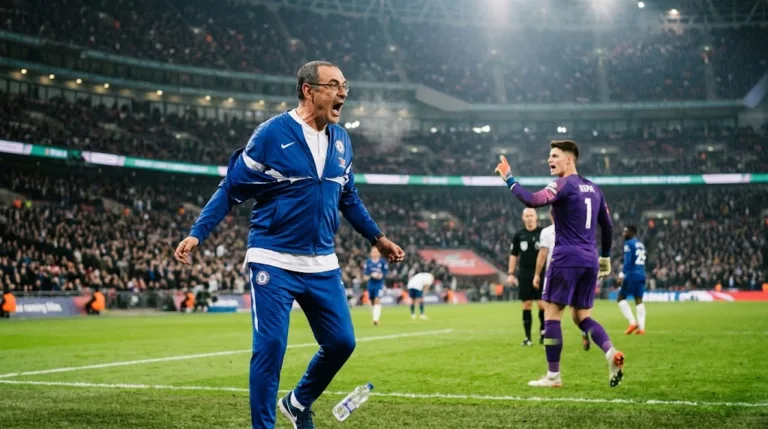
Ferguson believed that no player should ever become more famous or powerful than the manager. Just as football fans were stunned by Kepa Arrizabalaga defying Maurizio Sarri on the pitch at Wembley, Ferguson refused to let any star ignore his strict rules. He felt Beckham was losing his hunger for hard running and tactical discipline.
The tension had been building for months leading up to that rainy February afternoon in 2003. Arsenal was United’s biggest rival, and the FA Cup fifth round match was a fierce battle for dominance. Every single mistake on the pitch carried massive weight for the rest of the season.
The Mistake That Sparked the Blast
During the second half, Arsenal broke forward on a rapid counter-attack down United’s right flank. Sylvain Wiltord chased the ball into space while Beckham jogged slowly behind him rather than sprinting to help his defense. Wiltord scored Arsenal’s second goal, sealing an embarrassing 2-0 defeat for United on home turf.
When the final whistle blew, Ferguson walked into the tunnel with steam practically coming out of his ears. He hated losing to Arsenal, but he hated seeing his players give up on a chase even more. As soon as the dressing room door slammed shut, the famous hairdryer treatment began.
Ferguson called out Beckham by name in front of the entire squad. The manager insisted that Beckham’s lazy jog had cost the team their place in the cup competition. Instead of looking down and taking the criticism like other players, Beckham looked straight into Ferguson’s eyes.
Beckham muttered a curse back at Ferguson, dismissing the manager’s tactical complaint. That disrespect broke the final thread of Ferguson’s patience. The boss took two fast steps across the floor, saw a pile of dirty gear, and swung his right leg with full force.
A heavy Puma boot flew straight off the floor at high speed. Ferguson later admitted that if he tried that shot a million times, he could never hit that exact spot again. The leather stud clipped Beckham right on the eyebrow, splitting the soft skin wide open.
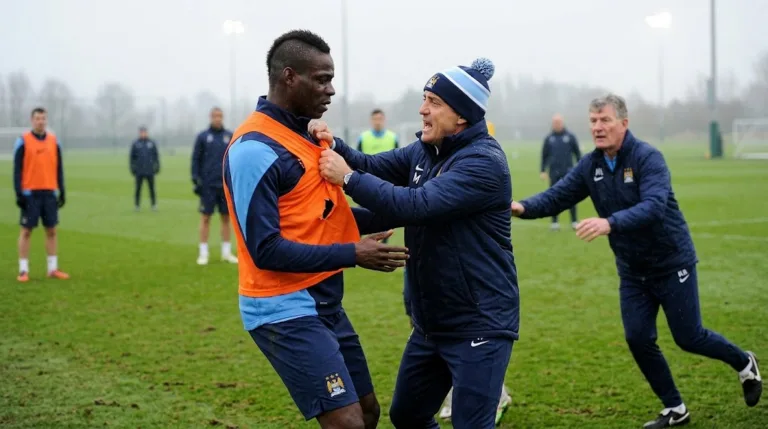
It was the kind of fiery clash reminiscent of Roberto Mancini fighting Mario Balotelli during an intense training session. But this fight was happening behind closed doors between the two biggest figures in British sports. The club doctor rushed into the room with gauze and needle, placing two stitches into the bleeding wound while Beckham glared across the locker room.
The Hairband and the Flight to Madrid
The physical cut was small, but the damage to their relationship was permanent. The next morning at the training ground, Beckham made a calculated choice before facing the cameras. He wore an Alice hairband that pulled his fringe back tightly, putting the white medical strip on full display.
Photographers captured the bandage from every angle, and the pictures dominated the front pages of every British newspaper. Ferguson felt the public display was a direct challenge to his authority at the club. The manager decided right then that David Beckham’s time at Manchester United was over.
Ferguson knew that once a player thought he was bigger than the manager, the club’s culture would collapse. He called the club board and told them to start looking for transfer bids. Within four months, Manchester United accepted a 25 million pound offer from Real Madrid.
Beckham packed his bags for Spain, ending a brilliant decade that produced twelve major trophies at Old Trafford. Fans across England were heartbroken to see their hero leave in such sudden and bitter fashion. The boy who wore number seven had outgrown the kingdom that raised him.
Years later, both men spoke about the flying boot with a softer touch and deep mutual respect. Beckham admitted he made mistakes in how he acted, and Ferguson praised Beckham’s unbelievable work rate and legacy. Yet that stray flying boot remains the exact moment the greatest father-son dynasty in English football came crashing down.

Callum Mercer is a football journalist and digital editor specializing in long-form features, human-interest narratives, and regulatory shifts across European and world football. With nearly a decade of experience tracking player journeys from lower-league academies to continental tournaments, Callum focuses on primary-source reporting, tactical context, and the untold stories behind the matchday headlines.